
By NeoDry Pumps. Reviewed July 2026.
The Kashiyama NeoDry G-Series is a family of oil-free dry vacuum pumps (7G, 15G, 30G, 36G) covering roughly 6.6 to 36 cubic meters per hour. NeoDry pumps are multi-stage Roots dry pumps, not scroll pumps, though they are often compared with dry scroll and E-Series pumps as replacements. Their higher-capacity models extend past the throughput range of many laboratory-class dry pumps, which helps in evacuation-limited and backing roles. Confirm exact model figures against the current NeoDry datasheet.
In semiconductor, coating, aerospace, and cryogenic research, the roughing and backing pump sets throughput, contamination control, and efficiency. It is a performance driver, not background infrastructure, and engineers evaluate it that way.
Kashiyama NeoDry G-Series pumps run oil-free and deliver throughput beyond many traditional dry vacuum technologies. NeoDry pumps are not scroll pumps, though they are often evaluated as replacements for dry scroll pumps in laboratory, coating, and process-vacuum applications.
NeoDry G-Series vs Dry Scroll and E-Series Pumps
The table below shows how higher-capacity NeoDry systems extend past the throughput range of many laboratory-class dry pumps. For other models and replacement pump options, see the full lineup.
| Platform | Flow (m³/h) | Ultimate Pressure | Oil-Free |
|---|---|---|---|
| NeoDry 15G | 15.0 | 1.0 Pa | Yes |
| NeoDry 30G | 30.0 | 1.0 Pa | Yes |
| NeoDry 36G | 36.0 | 0.7 Pa | Yes |
| Edwards nXDS15i | 15.1 | 0.7 Pa | Yes |
| Edwards nXDS20i | 22.0 | 3.0 Pa | Yes |
| Pfeiffer HiScroll 18 | 18.0 | ~1 Pa class | Yes |
Throughput and Pump-Down Performance
Figure 1 illustrates representative performance behavior derived from published specifications and operating characteristics. Larger-capacity NeoDry systems maintain higher effective pumping speeds through transitional pressure regions, directly influencing evacuation time and cycle throughput.
In coating systems and load-lock architectures, the practical result is reduced process bottlenecking between cycles. For engineers managing throughput-sensitive systems, this can materially improve overall equipment utilization.
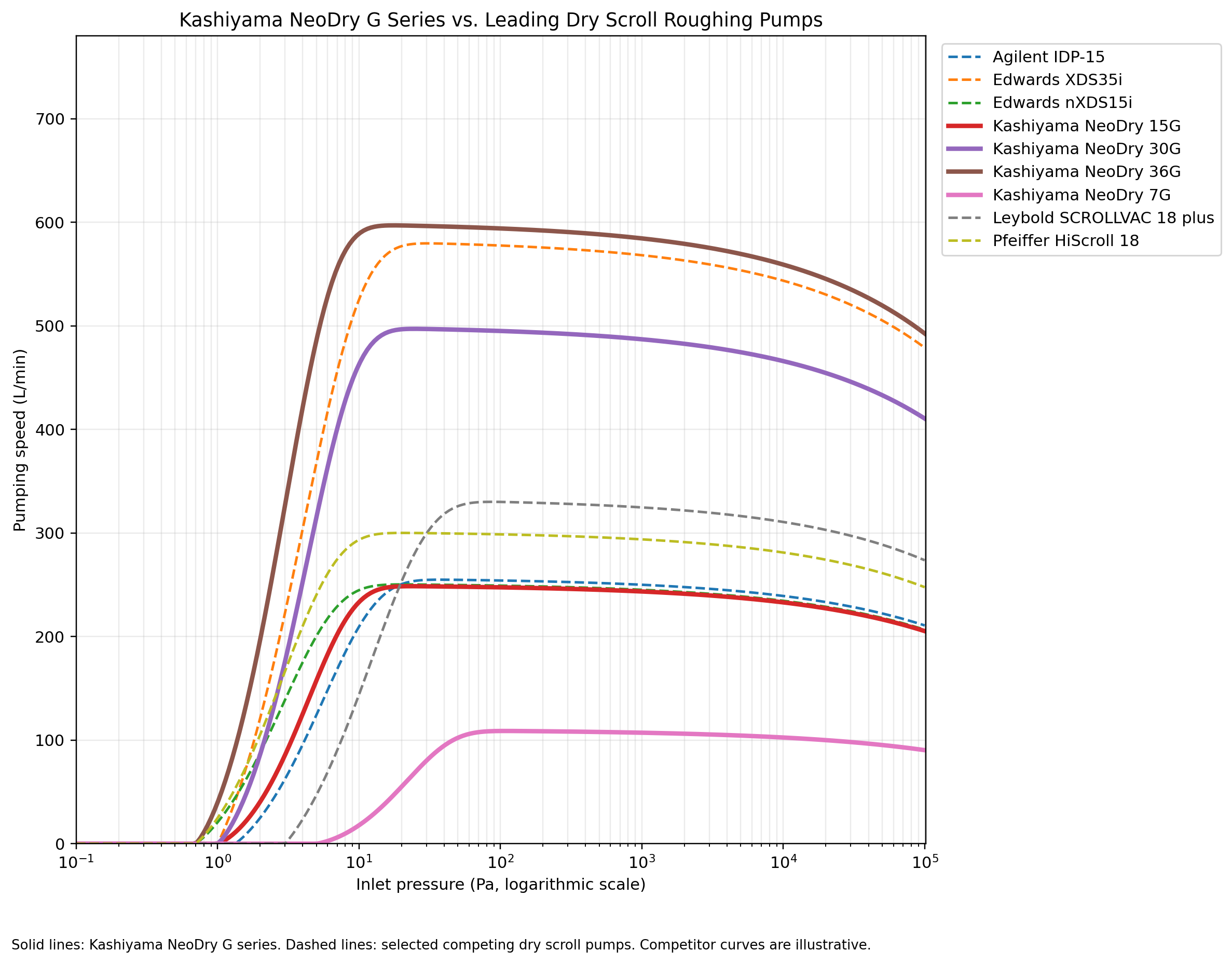
Figure 1. Comparative Pump Performance (derived from published specifications). Solid lines show Kashiyama NeoDry G-Series performance. Dashed competitor curves are illustrative.
Using the NeoDry G-Series as a Backing Pump
Vacuum performance depends on the interaction between roughing systems, high-vacuum pumps, conductance, gas load, and process geometry. NeoDry systems are commonly integrated as clean backing pumps for turbomolecular and cryogenic systems in applications where hydrocarbon contamination cannot be tolerated.
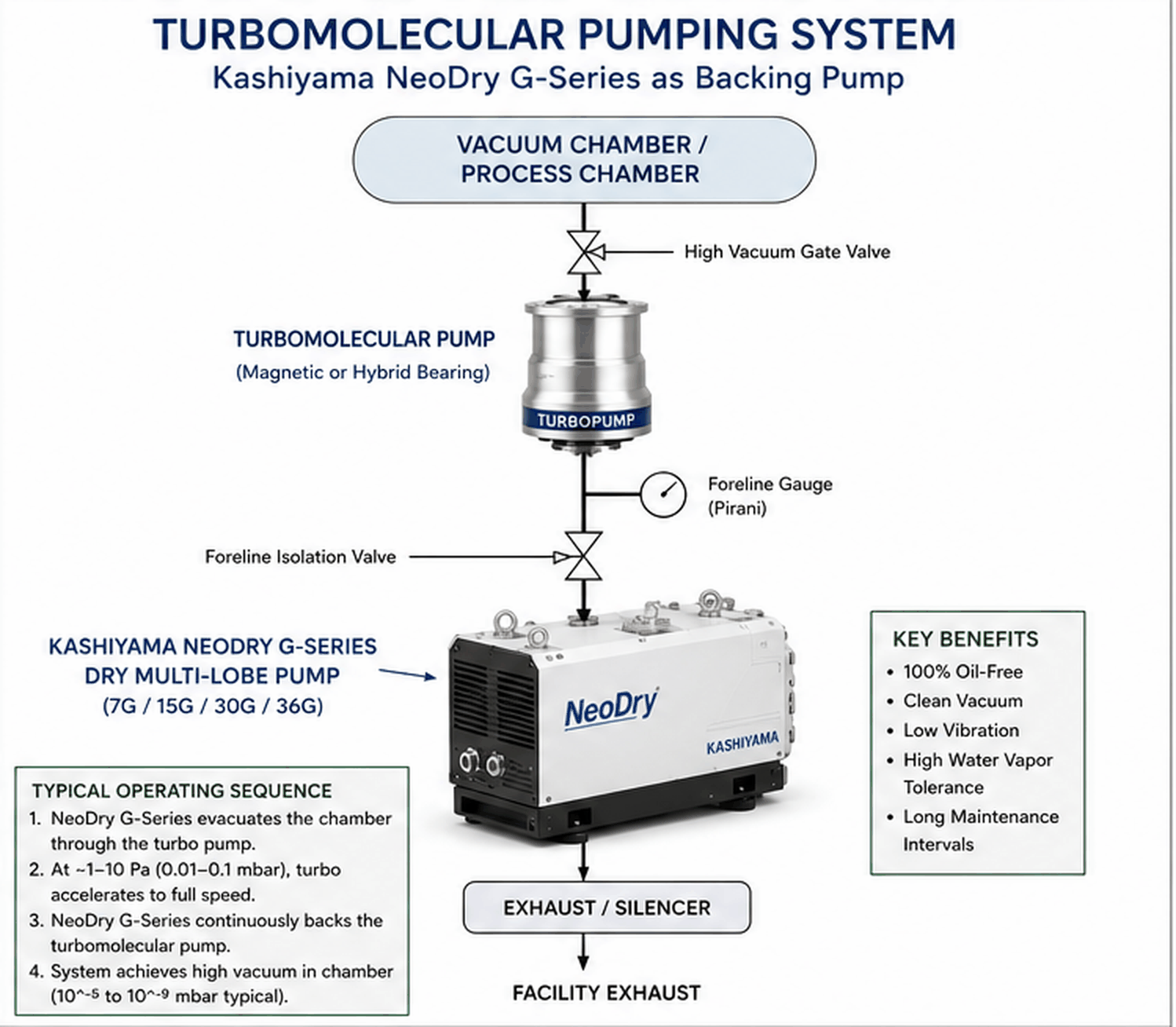
Figure 2 illustrates a representative architecture used in coating, semiconductor-adjacent, and research environments.
NeoDry G-Series by Application: Semiconductor, Coating, and Research
In semiconductor-adjacent environments, engineers prioritize contamination control, rapid cycling, and stable backing performance. NeoDry systems are particularly relevant in load-lock support, metrology systems, analytical instrumentation, and clean roughing applications.
In thin-film coating and vacuum metallization systems, throughput is frequently constrained by pump-down time rather than deposition itself. Higher-capacity NeoDry systems can materially reduce evacuation bottlenecks, increasing productive tool time.
Research laboratories and cryogenic facilities often require stable operation under moisture-heavy conditions and repeated regeneration cycles. Oil-free operation and simplified maintenance improve operational reliability in these environments.
Total Cost of Ownership and Reliability
The financial impact of vacuum architecture extends beyond initial capital cost. Downtime, maintenance frequency, contamination-related yield loss, and utility consumption all contribute to lifecycle cost.
Oil-free systems eliminate oil disposal, reduce hydrocarbon contamination pathways, and simplify maintenance workflows. In high-utilization systems, even modest reductions in downtime can produce significant annual savings.
Is the NeoDry G-Series Right for Your System?
The NeoDry G-Series is more than a drop-in for a dry scroll pump. It is a high-performance, oil-free platform built for modern throughput, contamination, and reliability requirements, and it should be evaluated on those terms.
For engineers designing advanced vacuum systems, the gains are system-level: shorter evacuation time, lower contamination risk, better uptime, and lower lifecycle cost.
To match a NeoDry G-Series model to your system, request a quote or datasheet from NeoDry.
References
- O’Hanlon, J. F. (2003). A user’s guide to vacuum technology. Wiley.
- Mattox, D. M. (2010). Handbook of physical vapor deposition processing. Elsevier.
- Kashiyama Industries. NeoDry G-Series documentation.
- Edwards Vacuum. nXDS dry vacuum pump specifications.
- Pfeiffer Vacuum. HiScroll dry vacuum pump specifications.
Frequently Asked Questions
What is the Kashiyama NeoDry G-Series?
The NeoDry G-Series is a family of oil-free dry vacuum pumps built on a multi-stage Roots platform. It includes the 7G, 15G, 30G, and 36G models and provides clean, oil-free pumping for lab, coating, research, and process-vacuum systems.
Is a NeoDry pump a scroll pump?
No. NeoDry pumps are multi-stage Roots dry pumps, not scroll pumps. They are commonly compared with and used to replace dry scroll pumps, but the pumping mechanism is different.
How does the NeoDry G-Series compare to a dry scroll pump?
Both are oil-free, but higher-capacity NeoDry G models extend past the throughput range of many laboratory-class scroll pumps, which helps where evacuation speed or backing capacity is the limit. Compare specific models against current datasheets for your requirements.
What is the difference between the NeoDry E-Series and G-Series?
The G-Series is the current generation and is positioned as an upgrade path from earlier E-Series models. Confirm the exact model-to-model differences against Kashiyama documentation before specifying a replacement.
How does the NeoDry G-Series compare to a rotary vane pump?
NeoDry pumps are oil-free, so they avoid the oil maintenance and hydrocarbon contamination of oil-sealed rotary vane pumps. In contamination-sensitive work, that difference often outweighs the lower purchase price of a rotary vane pump.
What throughput does the NeoDry G-Series cover?
The G-Series spans roughly 6.6 to 36 cubic meters per hour across its models. Confirm exact pumping speed and ultimate pressure for each model against the current datasheet.
Can a NeoDry pump back a turbomolecular or cryogenic pump?
Common applications include thin-film and vacuum coating, load-lock and metrology support, analytical instrumentation, research and cryogenic backing, and clean roughing in semiconductor-adjacent systems.
Can a NeoDry G-Series replace my current dry scroll pump?
In many lab, coating, and process-vacuum systems, NeoDry pumps are evaluated as scroll pump replacements. Whether it is a direct fit depends on your required pumping speed, ultimate pressure, and connections.
Where can I get NeoDry pumps and a quote in the USA?
NeoDry pumps are available in the United States with datasheets, model selection help, and quotes. Contact NeoDry with your system details to confirm the right model.
What applications use the NeoDry G-Series?
Common applications include thin-film and vacuum coating, load-lock and metrology support, analytical instrumentation, research and cryogenic backing, and clean roughing in semiconductor-adjacent systems.